I don’t remember the first time my dad took me fishing. I was too young. What I remember is that it was simply part of our life, the way other families might always watch the game on Sunday. I grew up near Lake Erie, and the water shaped how I understood the world.
Night crawlers threaded onto an Erie Dearie, trolling for walleye in a light chop. Dropping a minnow rig through the ice on a winter morning, hoping a few perch would bite. Dad explaining, without making it feel like a lesson, when to set the hook and how to be patient in a way that didn’t feel like waiting. When I was old enough, we moved into the fields and hedgerows, pheasant and rabbit hunting in the kind of cover that forces you to slow down and notice everything.
I was hooked. Not just on fishing or hunting, but on the experience of being outside with someone who knew things and was willing to share them. That’s the thing about a good mentor: you don’t always realize what they are until years later.
Passing It Forward
Some people receive that kind of introduction and keep it to themselves. I couldn’t. While I was in college, I worked as a camp counselor for the Michigan United Conservation Clubs, teaching hunter education and bowhunter education and putting fishing rods into the hands of kids who had never held one. Watching someone catch their first fish or hit their first bullseye with a bow lets you relive the excitement of your own first time on a lake or at the range. It never gets old.
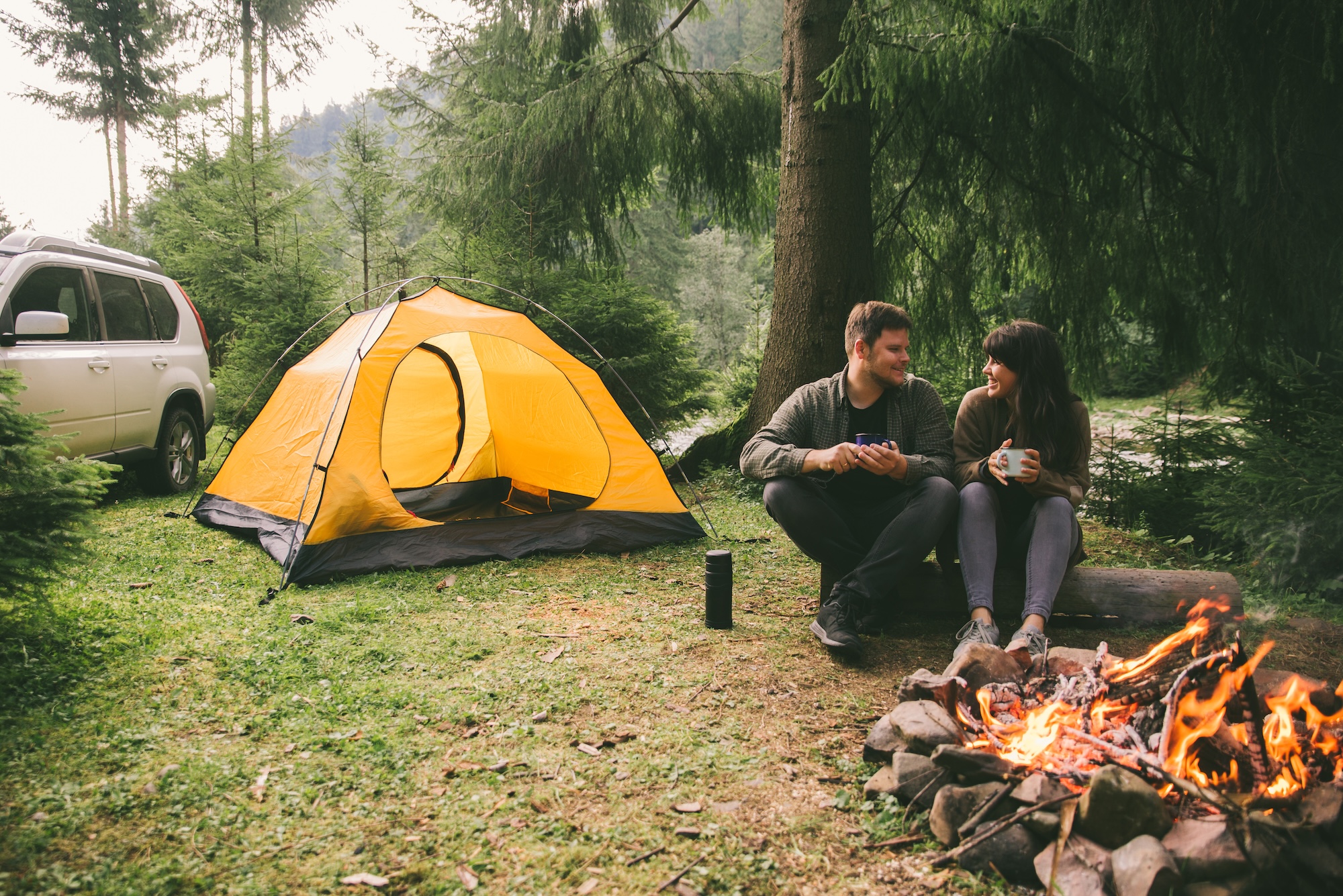
My own kids grew up fishing and hunting the same way I did: it was simply what we did as a family. For us, recreation meant the outdoors, whether that was time together on a lake chasing panfish, a tent pitched in the backyard, or time in the woods scouting for deer once they were old enough.
But the mentoring moment I remember most clearly from recent years didn’t involve a child at all.
A few years ago, a colleague saw a photo on my phone from a walleye trip with a friend. He went quiet for a second and then told me his grandfather used to take him fishing when he was a kid, but that he hadn’t been in years. There was something in the way he said it, like someone who had just remembered where he had left an important part of himself.
I told him we could fix that.
We hit a small inland lake where the panfish bite was hot. Nothing fancy. No special gear or elaborate plan. Just two guys, some bobbers, and worms on a lake that was more than willing to cooperate. We brought home a nice catch of bluegill and sunfish and pan-fried them that evening.
The following week, he walked me out to his car to show me the fishing gear he had just bought: rod, reel, tackle box, the works. He had gone to the store on his own, made his own choices, and invested in something he wanted to make part of his life again. That’s what a rekindled connection looks like. One afternoon on a small lake, and something dormant for years came back to life.
Why This Matters Beyond the Sale
I tell those stories because they are not unusual. In fact, they reflect what survey research has shown for years: many hunters and anglers are introduced to these activities by someone they know personally, often a parent, grandparent, relative, friend, neighbor, or coworker who invited them along. [1]
This matters well beyond nostalgia. A significant share of the conservation funding system that supports American wildlife is tied to participation in hunting and fishing, through mechanisms such as Pittman-Robertson, Dingell-Johnson, state license sales, and the Federal Duck Stamp. [2] When participation grows, conservation capacity tends to grow with it. When participation declines, habitat funding, wildlife research, and public access programs feel the pressure. Participation is not just a business metric. It is one of the primary engines that funds the resource.
The U.S. Fish and Wildlife Service has documented a long-term decline in hunting participation over several decades, even as the overall population has grown. [3] Fishing has shown more resilience, but sustained participation still cannot be taken for granted. These traditions do not perpetuate themselves. Someone has to extend the invitation.
That reality has helped elevate one of the most important frameworks in the outdoor space: Recruitment, Retention, and Reactivation, commonly known as R3. It has become a widely used lens for addressing participation decline and for shaping how many brands, agencies, and organizations think about programs, products, and outreach. [4]
What R3 Actually Means
R3 is not a single program. It is a way of thinking about the full arc of a person’s relationship with hunting and fishing. Recruitment brings new people in. Retention keeps them engaged after the first experience. Reactivation brings back lapsed participants, people like my colleague, who stepped away and may simply need someone to remind them what they were missing.
Reactivation is often undervalued, but it may represent one of the clearest near-term opportunities in the participation challenge. There are millions of Americans who hunted or fished at some point in their lives and gradually drifted away, not because they stopped caring, but because life got busy and no one kept the door open. Sometimes a single afternoon on a lake or stream is enough to bring that connection back to life.
State wildlife agencies have increasingly adopted R3 as an organizing framework for outreach and program design, and the Wildlife Management Institute has done substantial work to help agencies build R3 strategies grounded in research. [5] The framework has also influenced how trade associations and conservation organizations think about the long-term return on recruitment and retention investments.
What the Industry Is Building
Across hunting, fishing, and archery, the infrastructure being built around R3 is impressive, and it extends well beyond traditional advertising.
The Archery Trade Association has helped build structured entry pathways through programs such as Explore Bowhunting and Learn to Hunt. [6] These efforts are designed to connect first-time participants with mentors, provide guidance on equipment and access, and create supported first experiences that make continued participation more likely. The ATA clearly understands that growing archery participation and growing bowhunting participation are related goals.
The National Shooting Sports Foundation’s First Shots program addresses one of the most common barriers new participants report: walking into a shooting range without knowing what to expect. [7] By partnering with ranges to offer structured and welcoming first experiences, the program helps reduce intimidation and uncertainty at the point of entry. One good first experience can make a lasting difference.
The Recreational Boating and Fishing Foundation operates the Take Me Fishing campaign and the Spanish-language Vamos A Pescar program, reflecting an understanding that the next generation of anglers will not look exactly like the last. [8] Reaching new audiences requires relevant messaging, accessible pathways, and presence in the communities where interest already exists. The RBFF has invested heavily in digital platforms and partnerships intended to do just that.
Conservation organizations have been equally serious. Ducks Unlimited, the National Wild Turkey Federation, Pheasants Forever, Quail Forever, and Trout Unlimited all operate youth, mentored-entry, or recruitment-oriented programs. [9] Many of these organizations have arrived at a clear understanding: long-term conservation impact depends in part on their ability to help grow the next generation of participants. Recruitment is not separate from the mission; it has become central to sustaining it.
Bringing More People to the Table
One of the most consequential shifts in the R3 conversation over the past decade has been the recognition that the next generation of hunters and anglers will likely be more diverse than the last, and that inclusion requires more than simply leaving the door open. [10]
Women represent a growing share of new hunting and fishing participants, and research suggests that women-specific programming and female mentors can improve confidence, belonging, and retention. [11] Organizations such as Women in the Outdoors, a program of the National Wild Turkey Federation, have built peer-oriented entry experiences around that insight. The Becoming an Outdoors Woman program, offered through agencies and partners across the country, provides hands-on workshops in hunting, fishing, and outdoor skills designed specifically for adult women who are new to these activities. [12] These programs work in part because the environment matters as much as the content.
Urban and suburban populations represent one of the largest reservoirs of potential new participants, and many people in those communities have no family connection to hunting or fishing. For them, the barrier is often not interest, but access, equipment, and knowing where to start. Programs that meet people where they are, lower the cost of a first experience, and connect them with patient mentors are the ones most likely to convert curiosity into commitment.
The rise of outdoor content creators has also opened doors that traditional industry marketing never could. Women hunters and anglers documenting their adventures, first-generation outdoorspeople sharing the learning curve honestly, and urban participants navigating public land hunting without family tradition are all doing a kind of mentor work at scale. They show their audiences that the door is open and that the learning curve is manageable. Brands that build genuine partnerships with these creators, rather than treating them as transactional sponsorships, are reaching people in ways a catalog ad never will.
The Mentor Is Still the Catalyst
All of this infrastructure matters. Programs create access. Marketing creates awareness. Products can remove friction and make a first experience easier. But none of it fully replicates what happened on that small inland lake, or what happened in the fields and woods with my dad, or what happens every time someone who genuinely loves this life takes the time to bring another person into it.
What gets shared in a mentored first experience is not primarily technique. It is meaning and connection: why the cold and the early mornings are worth it, why patience is part of the skill set, and why the relationship with the resource matters whether or not you harvest anything. That kind of experience requires presence. It requires someone who cares enough to show up for it.
Here is the most honest thing the industry can say about R3: every experienced hunter and angler has the capacity to function like a program. Not just as a potential participant in someone else’s campaign, but as a person who can change the trajectory of another person’s relationship to the outdoors with a single afternoon and a genuine invitation.
The industry’s job is to make that invitation easier to extend and easier to accept: to build access points, welcoming environments, beginner-friendly products, and mentored pathways that give both the experienced outdoorsperson and the curious newcomer somewhere to step into together.
But the invitation itself still has to come from a person. It always has. It always will.
The Obligation Is Shared
The outdoor industry has a stake in participation that goes beyond commerce. The wildlife, habitat, and public access that make these activities worth pursuing are sustained in part by a conservation funding system tied to active participants. [13] Every brand, retailer, and organization in this space benefits from that system. Every one of them has a stake in helping sustain it.
That means R3 belongs to everyone, not just state agencies or conservation nonprofits. It means funding the infrastructure that works. It means designing products and experiences that welcome beginners rather than assuming prior knowledge. It means telling stories that expand the circle rather than policing the boundaries of who belongs inside it. And it means, for those of us who hunt and fish, taking the time to bring someone along and sharing what we know in a way that awakens the desire to be outdoors.
My colleague is back on that small lake again this spring, this time with his nephew. I like to think that is how it works: one afternoon, one invitation, one person who remembered what it felt like and decided someone else deserved to feel it too.
That moment is still the heart of it. It always has been.
Sources
[1] U.S. Fish and Wildlife Service, National Survey of Fishing, Hunting, and Wildlife-Associated Recreation. Survey data consistently shows personal invitation as the primary pathway into hunting and fishing. fws.gov/program/national-survey-fishing-hunting-wildlife-associated-recreation [2] Pittman-Robertson Act (Federal Aid in Wildlife Restoration, 1937) and Dingell-Johnson Act (Federal Aid in Sport Fish Restoration, 1950). U.S. Fish and Wildlife Service, Wildlife and Sport Fish Restoration Program. fws.gov/program/wildlife-restoration and fws.gov/program/sport-fish-restoration. Federal Duck Stamp Program: fws.gov/program/federal-duck-stamp [3] U.S. Fish and Wildlife Service, National Survey of Fishing, Hunting, and Wildlife-Associated Recreation (conducted every five years). Long-term hunting participation trend data available at fws.gov/program/national-survey-fishing-hunting-wildlife-associated-recreation [4] R3 framework background: Association of Fish and Wildlife Agencies, R3 Community of Practice. R3 has been adopted as a national framework for addressing participation decline across state wildlife agencies and industry partners. fishwildlife.org [5] Wildlife Management Institute, R3 program planning and strategy resources. wildlifemanagementinstitute.org [6] Archery Trade Association, Explore Bowhunting and ATA Learn to Hunt programs. archerytrade.org [7] National Shooting Sports Foundation, First Shots program. nssf.org/first-shots [8] Recreational Boating and Fishing Foundation, Take Me Fishing and Vamos A Pescar campaigns. takemefishing.org and rbff.org [9] Organization program pages: Ducks Unlimited (ducks.org), National Wild Turkey Federation (nwtf.org), Pheasants Forever (pheasantsforever.org), Quail Forever (quailforever.org), Trout Unlimited (tu.org) [10] Participation demographic trend data: U.S. Fish and Wildlife Service National Survey and Southwick Associates participation research. Increasing diversity of hunting and fishing participants is documented across multiple survey cycles. [11] Research on women-specific programming and retention: Responsive Management and Southwick Associates have produced multiple studies on barriers and motivators for women entering hunting and fishing. responsivemanagement.com [12] Women in the Outdoors (NWTF program): nwtf.org/women-in-the-outdoors. Becoming an Outdoors Woman: The BOW program is administered through state wildlife agencies in partnership with the University of Wisconsin-Stevens Point. uwsp.edu/bow [13] Conservation funding and participation connection: U.S. Fish and Wildlife Service, Wildlife and Sport Fish Restoration Program apportionment formulas are tied in part to the number of paid hunting and fishing license holders in each state. fws.gov/program/wildlife-restoration
Scott Staelgraeve is the President of Retriever Talent Group, a boutique executive search firm operating exclusively in the hunting, archery, camping, and fishing segments of the outdoor industry. RTG is a member of the Dimensional Search® network.